
Protecting Mango Trees from Cold (a Zone 9 Reality Check)
No mango variety is truly cold hardy. According to UF/IFAS Extension, mature trees can withstand about 25°F for a few hours with injury to leaves and small branches, while young trees may be killed at 29 to 30°F. If you garden in USDA Zone 9, a normal winter can reach those numbers. That doesn’t make a mango impossible. It means your protection plan matters more than the variety name on the tag.
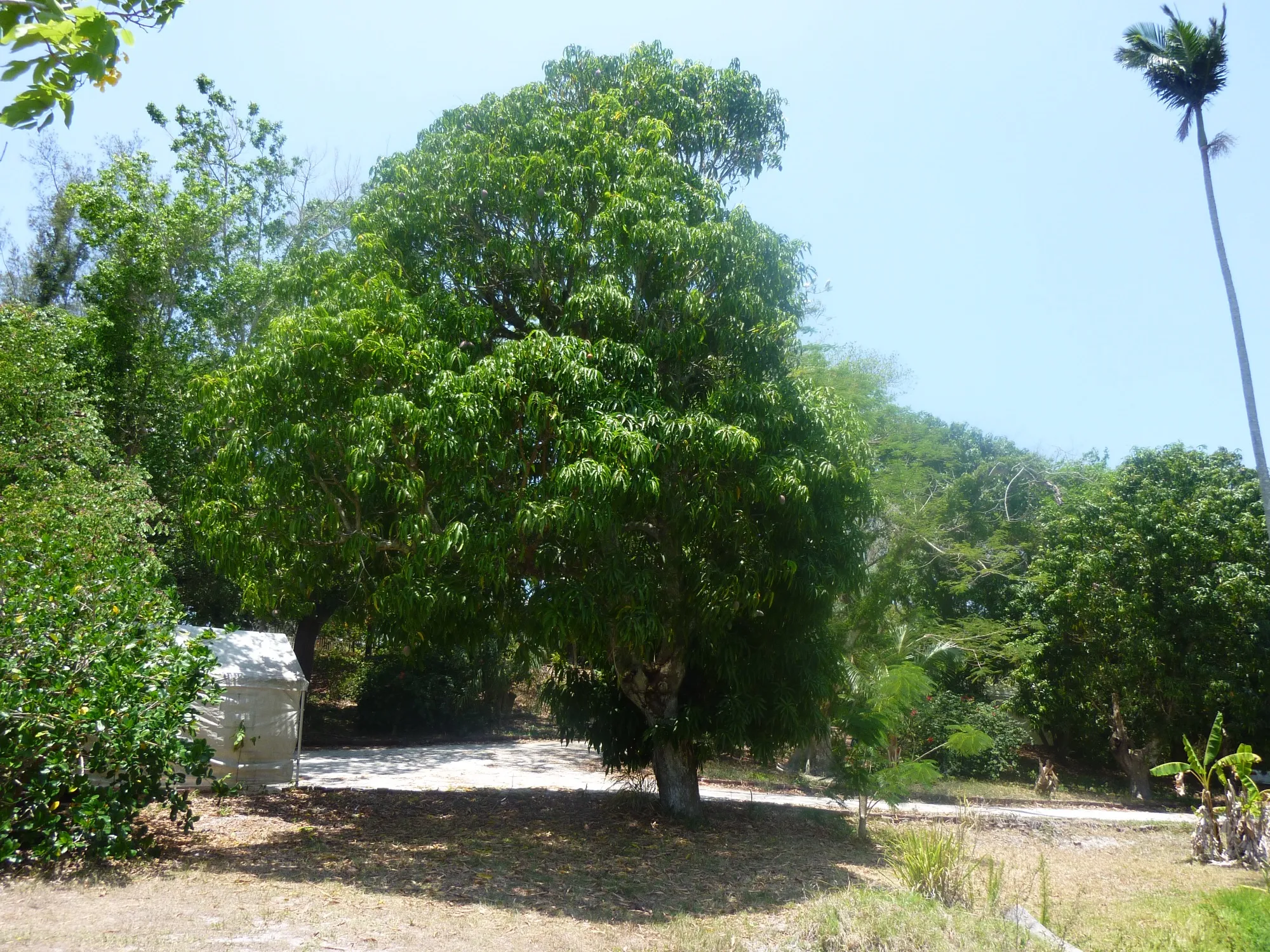
What is believed to be the original Cogshall mango tree, Bokeelia, Pine Island, on Florida’s southwest coast, photographed June 2011. UF/IFAS recommends Florida’s warm southeast and southwest coasts for mangoes. Photo: Squam256, Wikimedia Commons, CC BY-SA 3.0. Resized; no color changes.

How cold can a mango tree survive?
UF/IFAS gives three thresholds worth memorizing:
| What’s exposed | Damage threshold (UF/IFAS) |
|---|---|
| Flowers and small fruit | Damaged or killed below 40°F for a few hours |
| Young trees | May be killed at 29 to 30°F |
| Mature trees | Withstand about 25°F for a few hours, with injury to leaves and small branches |
Two details in that guidance change how you plan. First, UF/IFAS frames these as exposures of a few hours, so duration matters as well as the low on the forecast. Second, UF/IFAS says mango trees do not appear to acclimate to cold. Don’t expect cool weather earlier in the winter to harden your tree for a later freeze.
Is Zone 9 too cold for mango trees?
It’s outside the comfortable range. UF/IFAS Gardening Solutions lists mango for USDA Hardiness Zones 10A through 11. The USDA zone map is based on the average annual extreme minimum winter temperature, in 10°F zones and 5°F half zones. Zone 9a averages a coldest night of 20 to 25°F, and 9b averages 25 to 30°F.
Compare those ranges with the table above. In a typical 9b winter, the coldest night can land right on the threshold that may kill a young tree. In 9a it can go below what UF/IFAS says even a mature tree tolerates for a few hours. That’s an average, too, so some winters will be colder.
The honest answer for Zone 9: you can grow a mango, but plan on protecting it every winter and accept that a hard freeze can badly damage or kill it.
Are some mango varieties more cold tolerant?
Not in any way you should rely on. UF/IFAS reports that no significant difference in cold resistance among mango varieties or types has been observed in Florida.
Growers do sometimes report individual trees coming through a freeze better than their neighbors. Of the 346 varieties in Mango Atlas, exactly one carries a cold-tolerance note in our records: Pickering. Our record describes it as a few degrees more cold tolerant than most and notes the original seedling survived the 1983 freeze in a Boynton Beach grove. That’s a grower observation, not a tested hardiness rating, and it does not contradict the larger point. A few degrees of edge is not protection.
So skip any nursery label that promises a “cold-hardy mango.” Choose the variety you want to eat, then pick one that stays small enough to cover (more on that below).
Where should you plant a mango in a cold area?
Site choice is the cheapest protection you’ll get. UF/IFAS recommends planting mangoes in Florida’s warmest areas, along the southeast and southwest coasts, and notes that trees are grown in protected locations as far north as Merritt Island and along the southeast and southwest shoreline of Lake Okeechobee. Within your own yard, UF/IFAS advises choosing the warmest area of the landscape that does not flood or stay wet after typical summer rains.
In practice that means your yard’s warmest corner, out of low spots that stay wet, and in full sun, which Gardening Solutions says mango needs to produce well. If you can’t find a spot like that, a container may be the better choice.
How do you cover a mango tree before a freeze?
The rules below come from UF/IFAS county extension cold-protection guidance. They apply to any tender landscape plant, mango included.
- Cover all the way to the ground. Hillsborough County Extension explains that the covering must reach the soil to capture heat from the ground and block wind.
- Don’t “lollipop” a young tree. Orange County Extension warns against wrapping just the canopy and tying it off at the upper trunk. That leaves the tree without the soil heat that makes covering work.
- Use fabric, not plastic. Frost cloth, sheets, or quilts work. Plastic directly on the leaves transfers cold to the plant. Hillsborough notes you can put plastic over a sheet on windy or very cold nights.
- Keep the cover off the leaves where you can. Pinellas County Extension suggests a support frame, because cold transfers where the cover touches foliage.
- Cover before sunset, water first. Put covers on before the sun goes down. Hillsborough notes that slightly moist soil releases more heat than dry soil, and Orange County adds that mulch helps trap soil heat.
- Add gentle heat if needed. Hillsborough says a light bulb or non-LED string lights under the cover can add enough heat. LED lights don’t.
- Uncover the next day. Sheets and quilts should come off during daylight. Breathable frost cloth can stay on for several days of cold weather.
Why do small and potted mango trees have an advantage?
You can only cover a tree you can reach over. Once a mango is too tall for a frost cloth, a freeze hits it unprotected.
That’s where variety choice actually helps in Zone 9. You’re not looking for hardiness. You’re looking for size. Of the 346 varieties in Mango Atlas, our records list 65 as small or dwarf trees, and 46 are rated recommended for container growing. Only seven are both. Familiar small-tree options in our database include Pickering, Cogshall, and Julie. Our dwarf mango guide covers which ones stay small in practice.
A pot gives you the most flexibility. Hillsborough Extension suggests moving tropical plants to a porch, lanai, or garage, or grouping containers together and covering them to the ground. Pinellas adds that a spot under a tree canopy typically stays a little warmer. Our container growing guide covers the basics of growing one in a pot.
What about cold during bloom?
Even a tree that comes through winter undamaged can lose its crop. UF/IFAS lists low temperatures during bloom, together with anthracnose and powdery mildew, among the most limiting factors to mango production in Florida. Remember the 40°F threshold for flowers and small fruit. If a small tree is in bloom when a cold night is forecast, you can cover it the same way you would for a freeze.
Should you prune a mango tree after freeze damage?
Not right away. A UF/IFAS horticulturist, Bob Black, advised that you can’t tell how much damage has been done until the plant starts new growth in spring, and that cutting live wood lets later freezes do more damage. Orange County Extension says dying, browning leaves can be removed, but be careful not to remove live branches or over-prune.
Once new growth shows where the live wood ends, prune back to it. On a grafted tree, watch where the new shoots start. UF/IFAS notes that most mango varieties are grafted onto rootstocks such as ‘Turpentine’. If a tree is killed back below the graft union, any new shoots come from the rootstock, not from the variety you planted.
The Zone 9 plan in one paragraph
Plant in your warmest well-drained spot or in a container. Choose a variety you want to eat that stays small enough to cover. Before every forecast near 32°F, and on cold nights during bloom, water, then cover to the ground with fabric before sunset, and add heat from non-LED lights for a hard freeze. Don’t count on any variety’s cold tolerance, and wait for spring growth before pruning damage. To compare tree size and container ratings across all 346 varieties, look them up in Mango Atlas.
Go deeper than any article
300+ variety profiles, your trees, your harvests, one app.