
The Best Dwarf Mango Trees for Small Yards (An Honest List)
“Dwarf” is doing a lot of work in mango marketing, and most of it is loose. A tag that says “dwarf mango tree” at a nursery can mean anything from a genuinely compact selection that stays under ten feet to a full-size tree that will simply take a few extra years to swallow your yard. We compared the dwarf and “condo mango” lists published by three major growers (Everglades Farm, Top Tropicals, and Fairchild Tropical Botanic Garden’s plant shop) against the tree-size and growth-habit records for all 346 varieties in Mango Atlas. They agree on a core group. They also disagree in ways that matter if your yard is small, and a couple of popular “condo” listings are, frankly, wishful thinking.
Here is the reconciled, honest version.
What “dwarf” actually means for a mango
A dwarf mango is a growth habit, not a size guarantee. Even true dwarfs want to be trees: left alone in the ground, nearly any mango will reach 15 to 20 feet or more. What the good compact varieties give you is a tree that is easy to hold at 8 to 12 feet with one post-harvest pruning a year, fruits well at that size, and does not sulk about it. Of the 346 varieties in Mango Atlas, 31 carry a true dwarf growth habit in their records and another 15 are semi-dwarf. Everything else is a big tree, whatever the pot tag says.
The true dwarfs worth planting
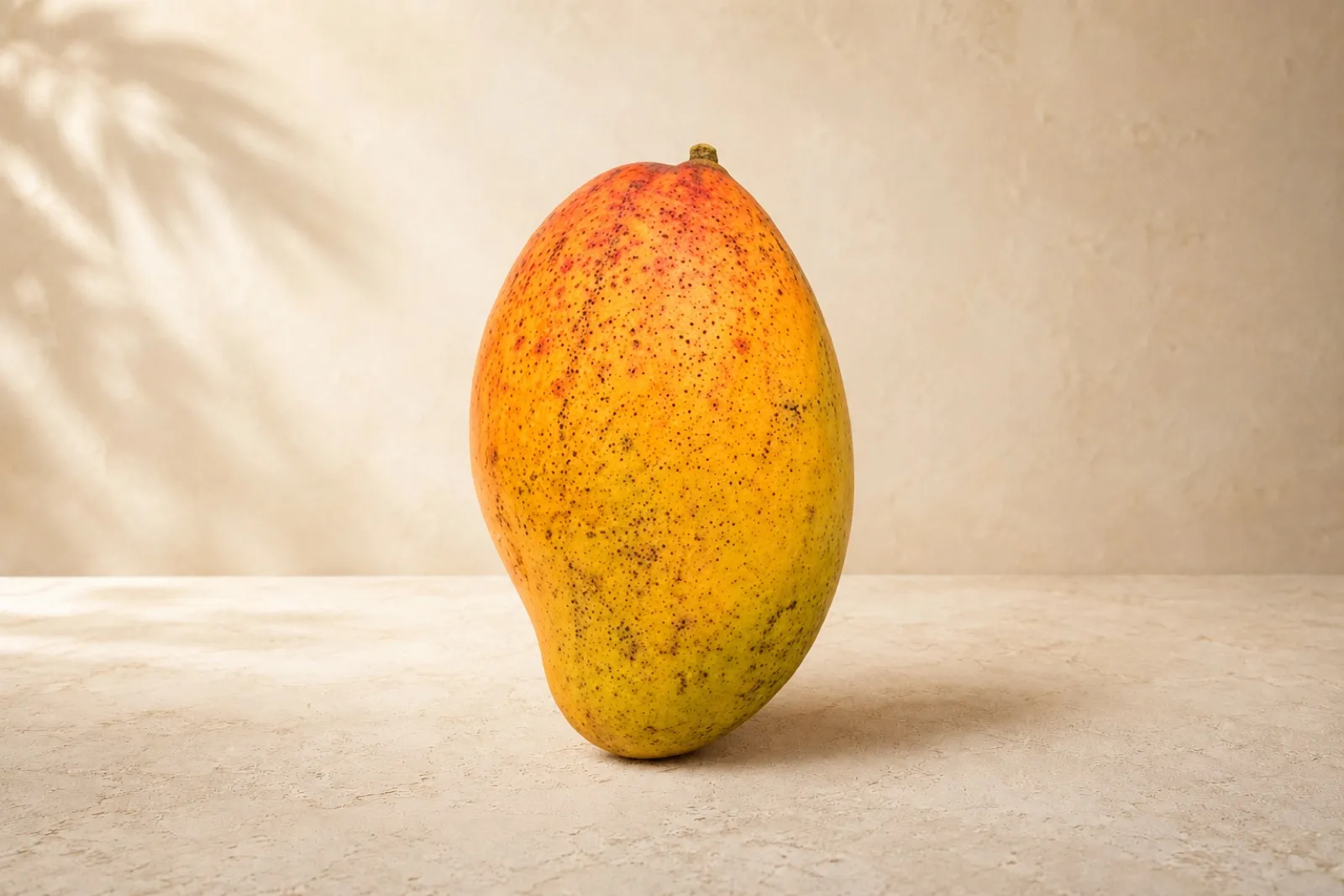
Pickering is the benchmark. Technically a semi-dwarf with a spreading habit, it is the variety nearly every condo-mango list opens with, and for good reason: it fruits early and reliably at a size you can pick without a ladder, and the fiberless, coconut-tinged fruit is genuinely good. If you plant one compact mango, this is the default.
Cogshall is naturally compact and dense, a heavy bearer, and the variety Dr. Richard Campbell (who coined the term “condo mango” at Fairchild) named a curator’s choice for containers. Aromatic, juicy, colorful fruit on a tree that behaves.
Dwarf Hawaiian does what its name promises: a compact, very early, very prolific tree with rich, sweet, coconut-flavored fruit. Its production rates Excellent in our records. One caution when shopping: the variety Rapoza is sometimes mislabeled and sold as “Dwarf Hawaiian,” and Rapoza is not a dwarf. Buy from a nursery that knows the difference.
Amrapali and Neelum are the Indian dwarfs. Amrapali is a bred dwarf hybrid with Excellent production; Neelum is a compact, dependable late-season producer that also rates Excellent. Both suit disciplined small-yard planting, and both give you Indian dessert-mango flavor without an Indian-size tree.
Nam Doc Mai #4 brings the classic Thai eating mango onto a small, compact frame. If you like green-eating or honey-sweet ripe Thai fruit, this is the space-efficient way to grow it.
Mallika is a dense Indian-type dwarf with outstanding flavor. One honest note from our data: it is rated not recommended for containers. In the ground in a small yard, pruned annually, it is excellent; in a pot it will disappoint.
Little Gem rounds out the true-dwarf group: compact, dense, and appropriately named.
The flavor picks with a catch
Julie and Ice Cream appear on every dwarf list, and both are genuinely small trees with cult-favorite flavor. Our production records rate both of them Poor, and Julie is disease-prone in humid climates. Plant them for love, not for volume: they are the “one perfect bowl of fruit” trees, not the “share with the neighborhood” trees.
Semi-dwarfs: manageable, not miniature
These stay reasonable with yearly pruning but are a clear step up in vigor: Fairchild (smallish and hardy with excellent disease resistance, though not a true dwarf), Honey Kiss (usually behaves like a dwarf, occasionally decides not to), Glenn, Angie, Rosigold (one of the earliest mangoes of the season on a compact frame), Graham, Cushman, Irwin, Juliette, and Okrung. A semi-dwarf in a small yard is a fine choice if you actually do the annual pruning. Skip a year or two and you will be negotiating with a 15-footer.
Sold as “dwarf.” Isn’t.
This is where nursery lists and reality part ways, and where our records earn their keep:
- Carrie appears on major condo-mango lists, and people repeat it constantly. Our grower notes are blunt: people refer to them as dwarf trees, but in our experience they are not. Carrie is compact-ish and the flavor is beloved, but plant it expecting a real tree.
- Lancetilla is listed as a condo mango by at least one large nursery. It is a large, vigorous tree, full stop. Our records and the collector community agree on this one.
- Keitt shows up on “manageable” lists because it grows slowly and gawkily. It is still a big tree that is merely polite about it for the first few years.
- Pineapple Pleasure is sold in a dwarf/condo collection at one nursery; our records have it as large and vigorous.
None of these are bad mangoes. They are bad small-yard promises.
Deep cuts for collectors
Beyond the famous names, our records flag several lesser-known true dwarfs with Excellent or Good production that almost never appear on nursery lists: Malindi (East African, Excellent production), Piva, Falan and Kook Lom Krong (Thai dwarfs), Toledo, and Super Julie (a more productive take on Julie’s compact frame). If you can find budwood or a grafted tree, these are the varieties that make a small collection interesting.
The bottom line
For most small yards: plant Pickering or Cogshall first, add Dwarf Hawaiian or Neelum for earliness and reliability, and reserve a spot for a Julie or Ice Cream only if flavor beats volume in your household. Confirm the variety name on the graft tag, not the marketing sign, and give whatever you plant one honest pruning right after harvest each year.
Every variety above links to its full profile, and the Mango Atlas encyclopedia carries tree size, growth habit, production, and disease-resistance records for all 346 documented varieties, so you can check any nursery’s claim against the data before you dig a hole.
Go deeper than any article
300+ variety profiles, your trees, your harvests, one app.