
Growing Mangoes From Seed: Polyembryonic vs. Monoembryonic (the Truth)
Plant a mango seed and you’ll get a tree. Whether that tree tastes anything like the fruit you ate is a different question, and the honest answer is: it depends on the seed, not on luck. Every mango seed is one of two types, polyembryonic or monoembryonic, and which one you’re holding determines whether you’re growing a clone of the parent or a genetic stranger. Nurseries know this. Most home growers don’t, which is why “I planted a seed from a mango I loved” so often ends in a tree that fruits nothing like it.
The seed lottery, and why it isn’t actually random
A monoembryonic seed contains exactly one embryo, and that embryo is the product of sexual reproduction: pollen from one tree fertilized the flower of another (or the same tree, self-pollinated), and the resulting seed is a genetic shuffle of both parents, the same way a human child isn’t a copy of either parent. Plant it and you get a brand-new, unpredictable individual. It might be mediocre. It might, rarely, be spectacular: Haden itself, the variety that launched the Florida mango industry, started life exactly this way, as a chance seedling grown from a Mulgoba pit planted in Coconut Grove in 1902 and generally believed to have been cross-pollinated by a nearby Turpentine tree. That’s the monoembryonic promise and the monoembryonic risk in one story: every named variety you’ve ever eaten started as somebody’s seed-grown surprise, and for every Haden there are thousands of seedlings that got pulled out or left to feed the squirrels.
A polyembryonic seed is different at the cellular level. It still has one sexual, zygotic embryo tucked inside, but alongside it the seed grows several additional embryos that form asexually from maternal tissue (nucellar tissue, if you want the term), with no pollen contribution at all. Those nucellar embryos are genetically identical clones of the mother tree. Crack open a polyembryonic seed after it germinates and you’ll often see three, four, sometimes more separate shoots pushing up out of one pit. Most of them are exact copies of the tree the seed came from. One, usually the weakest of the bunch, is the zygotic wildcard.
Which mangoes are polyembryonic?
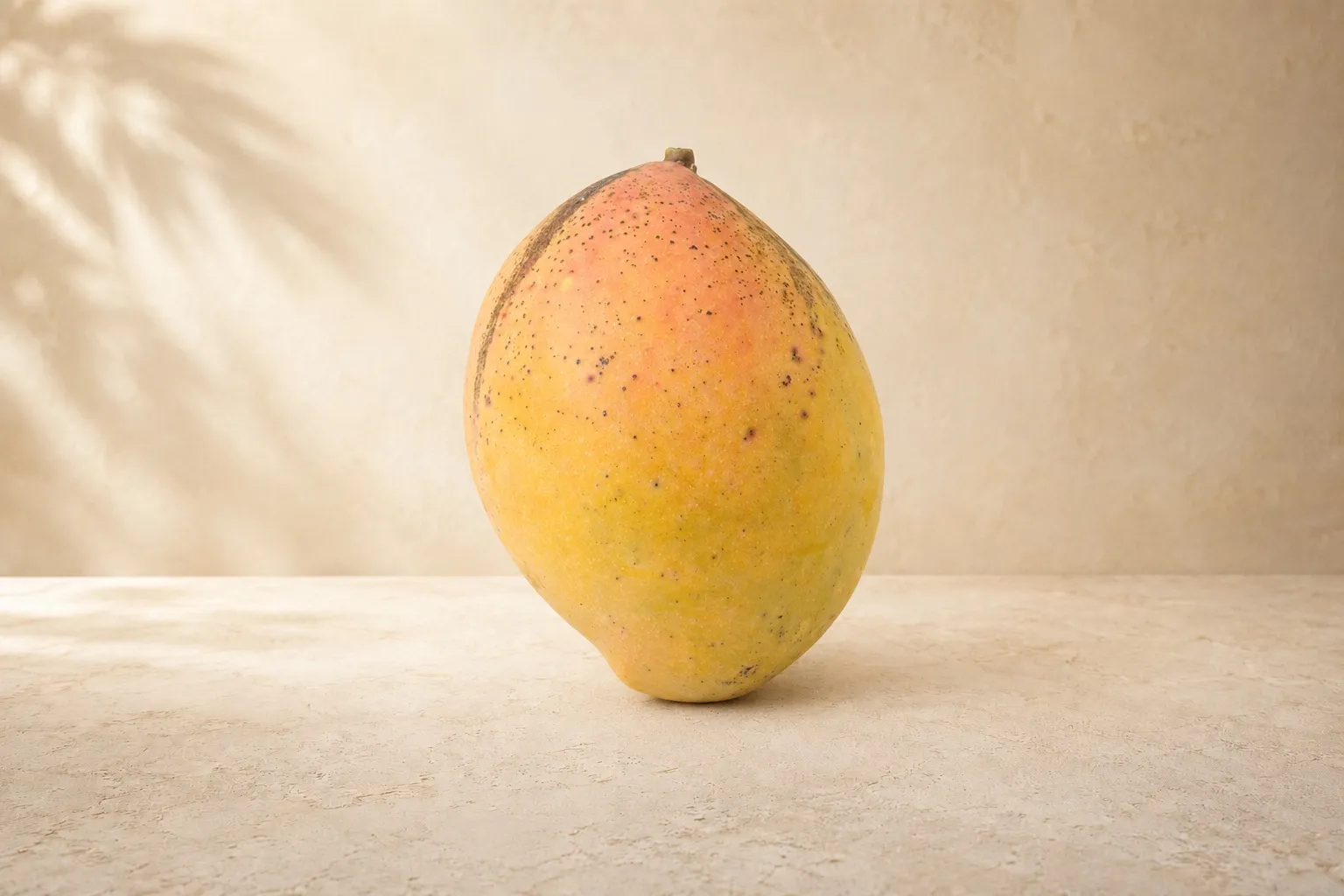
This is where a chart beats a rule of thumb, because embryony isn’t visible from the fruit and it isn’t consistent across origin the way people assume. Of the 346 varieties documented in Mango Atlas, 202 have their seed type recorded in the grower notes: 136 monoembryonic and 65 polyembryonic, with one, Sweet Tart, where the published sources flatly contradict each other: some describe a polyembryonic seed, while the breeder’s own notes call it the only monoembryonic variety with that Indo-Chinese flavor. We’re flagging that rather than quietly picking a side.
Set that one aside and the pattern in the other 201 tracks with what breeders will tell you: Southeast Asian landraces lean heavily polyembryonic, and Indian- and Florida-bred commercial cultivars lean heavily monoembryonic. Thai and Indochinese varieties like Nam Doc Mai #4, Cambodiana, Chok Anon, and Keow Savoy are polyembryonic, as is Coconut Cream and Honey Kiss. Meanwhile Alphonso, Haden, Kesar, and nearly every classic Florida-bred selection are monoembryonic, which is exactly why they had to be discovered as seedlings once and then propagated by grafting ever since; their seeds won’t reproduce them.
Growing a polyembryonic seed (and picking the right shoot)
If you know your seed is polyembryonic, seed-growing is genuinely a good way to get a true-to-type tree, not just a gamble that happened to work. Clean the husk off, let the seed dry for a day or two, then plant it flat side down about an inch deep in well-draining potting mix, warm and moist. Multiple shoots emerging from one seed within a few weeks is normal and expected, not a sign anything went wrong.
The practical trick is knowing which shoot to keep. Grower consensus (this is nursery and hobbyist experience, not a controlled study) is that the zygotic, sexual seedling tends to emerge weaker, thinner, and slower than its nucellar siblings, so the strongest, most vigorous shoots in the cluster are your best bet for true-to-type clones. Let all of them grow for a month or so until you can compare vigor, then thin to the one or two strongest and discard (or pot up separately as an experiment) the runt. You still won’t know for certain until it fruits years later, but this is a far better bet than planting a random monoembryonic seed and hoping.
What you’re actually growing from a monoembryonic seed
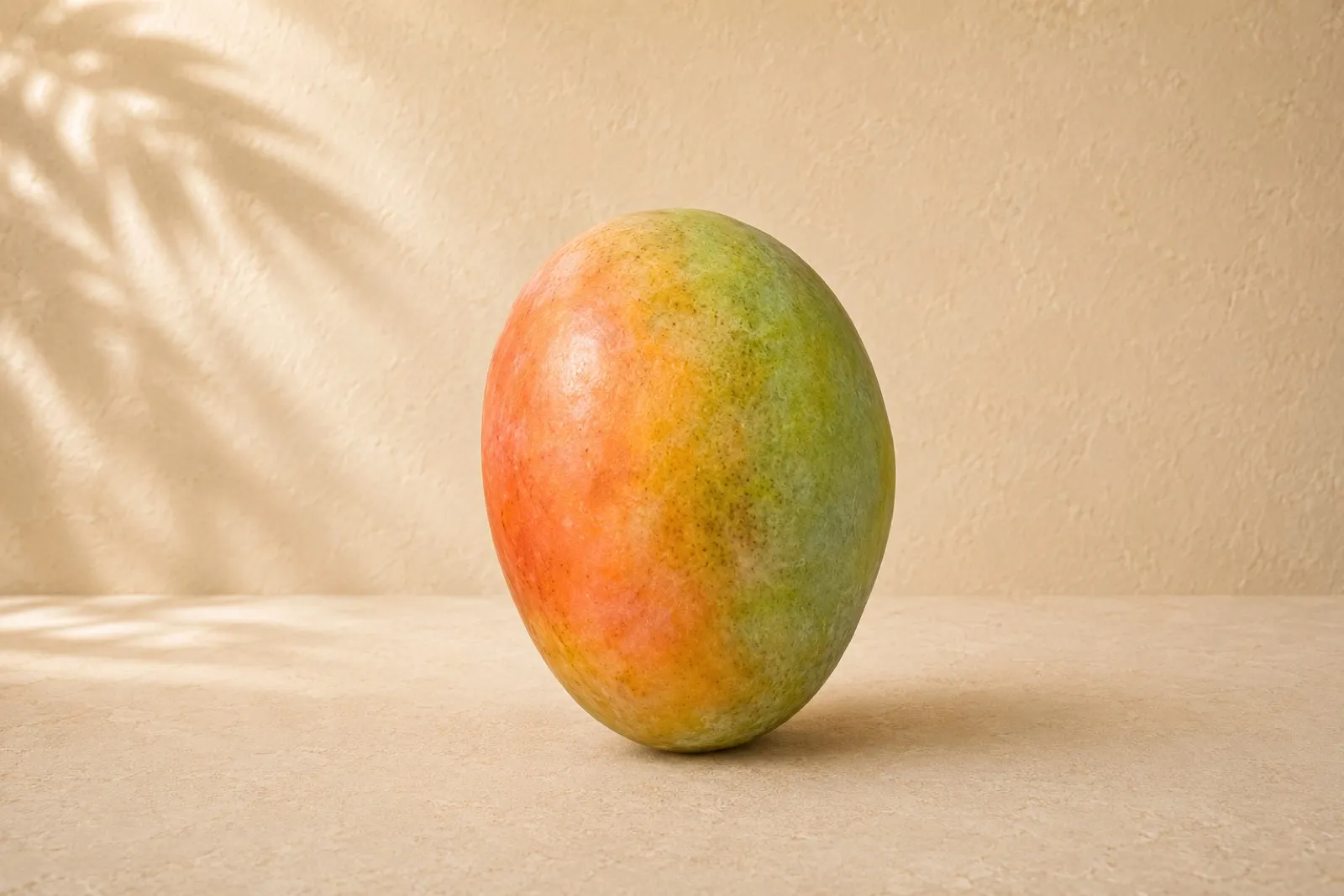
Plant a Keitt pit or an Alphonso pit expecting a Keitt or an Alphonso tree and you’ll be disappointed: monoembryonic seeds don’t clone anything, full stop, no matter how carefully you handle them. What you’ll get, if the seed was self-pollinated, is a tree with roughly half the parent’s genetics and half of whatever pollen happened to reach the flower first, which in a mixed backyard or grove could be almost anything. It’ll usually take four to six years to find out what you actually grew. That’s not a reason to skip it; a seed-grown monoembryonic mango is a legitimate hobby, and it’s exactly how every named variety in this app’s database of 346 got its start. It’s just not a shortcut to a known variety, and if what you actually want is a Keitt or an Alphonso in your yard, buy a grafted tree instead.
Why nurseries still graft polyembryonic seedlings anyway
Here’s the part that surprises people: even polyembryonic seed rarely gets sold as-is. Most commercial mango trees, polyembryonic parentage included, are still grafted, because a grafted scion fruits in two to three years instead of five to seven, and a nursery needs a rootstock that grows a strong, uniform, disease-resistant root system fast, not necessarily a rootstock that tastes good. Turpentine, a fibrous, resinous, not-particularly-tasty polyembryonic mango, is the classic Florida rootstock for exactly this reason: its seed clones true and fast every time, which makes it a dependable, uniform base to graft desirable scion wood onto. It’s also the mango that sits in the pedigree of many of Florida’s commercial cultivars, Haden included, from cross-pollinating monoembryonic Indian trees a century ago. The two seed types aren’t competing strategies; polyembryonic seed builds the reliable rootstock, monoembryonic seed occasionally hands the industry its next Haden.
The bottom line
Before you plant a mango seed expecting a copy of the fruit you ate, find out which type it is. If you don’t know offhand, check the variety’s page in Mango Atlas or search its name plus “polyembryonic”: Southeast Asian varieties are a reasonable bet, Indian and Florida-bred ones are not. Polyembryonic seed, grown correctly and thinned to the strongest shoots, gets you a true-to-type tree without a graft. Monoembryonic seed gets you a real mango tree that just isn’t the one you planted, which is either a disappointment or the start of your own backyard breeding project, depending on how you look at it. Either way, log what you plant: if you’re tracking a seed-grown tree toward its first fruit, the grow log in Mango Atlas is built for exactly that multi-year wait, so you have the notes to know what actually came up when it finally does.
Go deeper than any article
300+ variety profiles, your trees, your harvests, one app.