
Anthracnose is the disease behind the classic black spots on mango leaves, flowers, and fruit. It is particularly severe in humid regions with rain during flowering and fruiting, where it can blight entire flower panicles and rot fruit after harvest.
Symptoms
- Black spots on leaves, flowers, and fruit
- Flower blight during wet weather
- Dark, sunken lesions on mature fruit
- Post-harvest fruit decay
- Twig dieback in severe cases
Visual identification
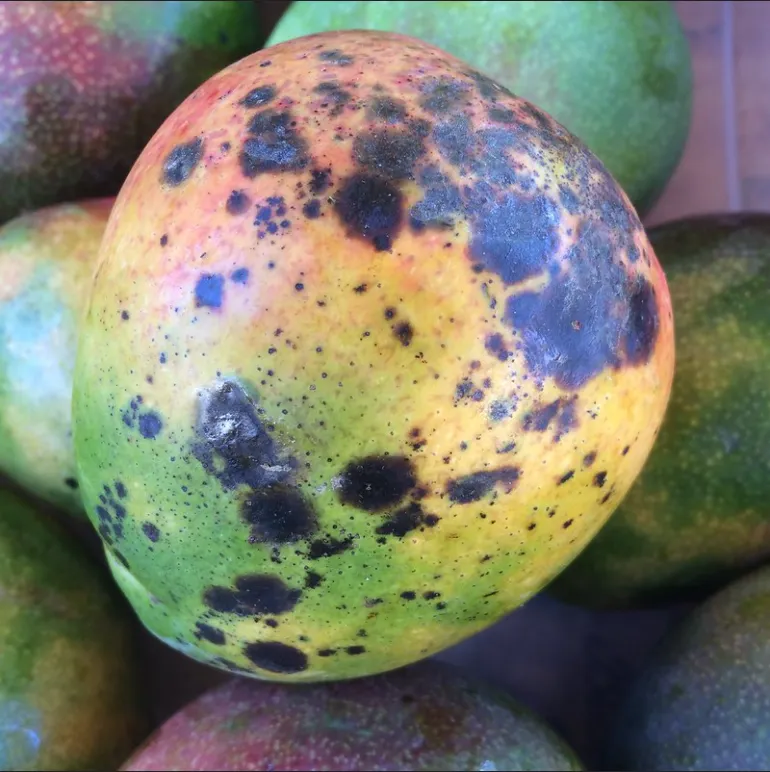
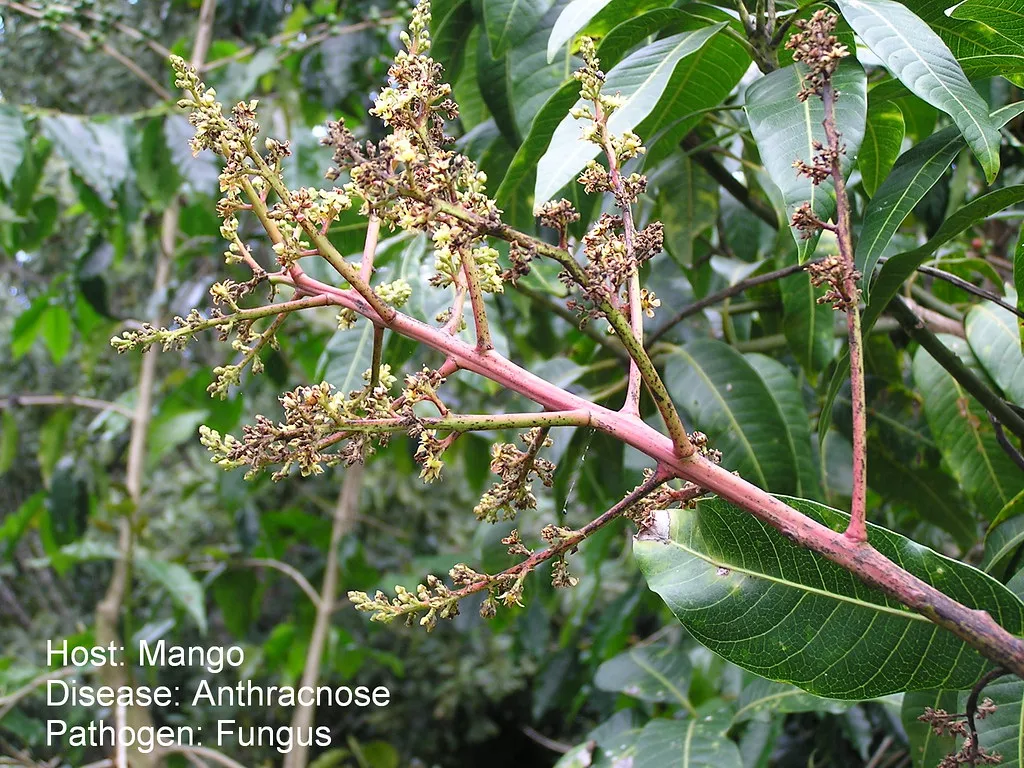
Photos: Scot Nelson, University of Hawaii CTAHR (CC0)
Seeing something like this on your tree? Photograph the leaf and the
Mango Atlas scanner will help you confirm the diagnosis before you treat.
Get the app.
Conditions that favor anthracnose
- High humidity and rainfall
- Poor air circulation in the canopy
- Infected plant debris left on the ground
Treatment & management
Cultural control
- Prune to maintain good airflow within the canopy
- Remove crossing or crowded branches
- Remove and destroy infected plant debris and fallen fruit
- Avoid overhead irrigation during flowering
Chemical control
Copper fungicides are effective against anthracnose.
- Begin spraying when flowers start to form
- Apply on a regular basis throughout flowering and fruit development
- Spray more frequently during rainy periods
- Follow label instructions for application rates
Biological control
- Bacillus subtilis biofungicides
- Trichoderma spp. products
- Use as part of integrated disease management
Spray schedule
| Pre-bloom | Apply copper fungicide when flower buds begin to swell. |
|---|---|
| Full bloom | Spray every 7-10 days during flowering with copper or sulfur. |
| Fruit set | Continue sprays every 10-14 days as fruit develops. |
| Rainy periods | Increase frequency to every 5-7 days during wet weather. |
Safety
- Always read and follow pesticide label instructions
- Wear appropriate protective equipment when spraying
- Observe pre-harvest intervals before picking fruit
- Do not spray during windy conditions
- Store all chemicals safely away from children and pets
Information compiled from University of Florida IFAS Extension, University of Hawaii CTAHR, international mango disease research, and integrated pest management guidelines. Photos: Scot Nelson, University of Hawaii CTAHR (CC0).